
“Interior architect Mairead Murphy opened up Studio Sisu to Est recently to share the shared creative workspace she has designed…”
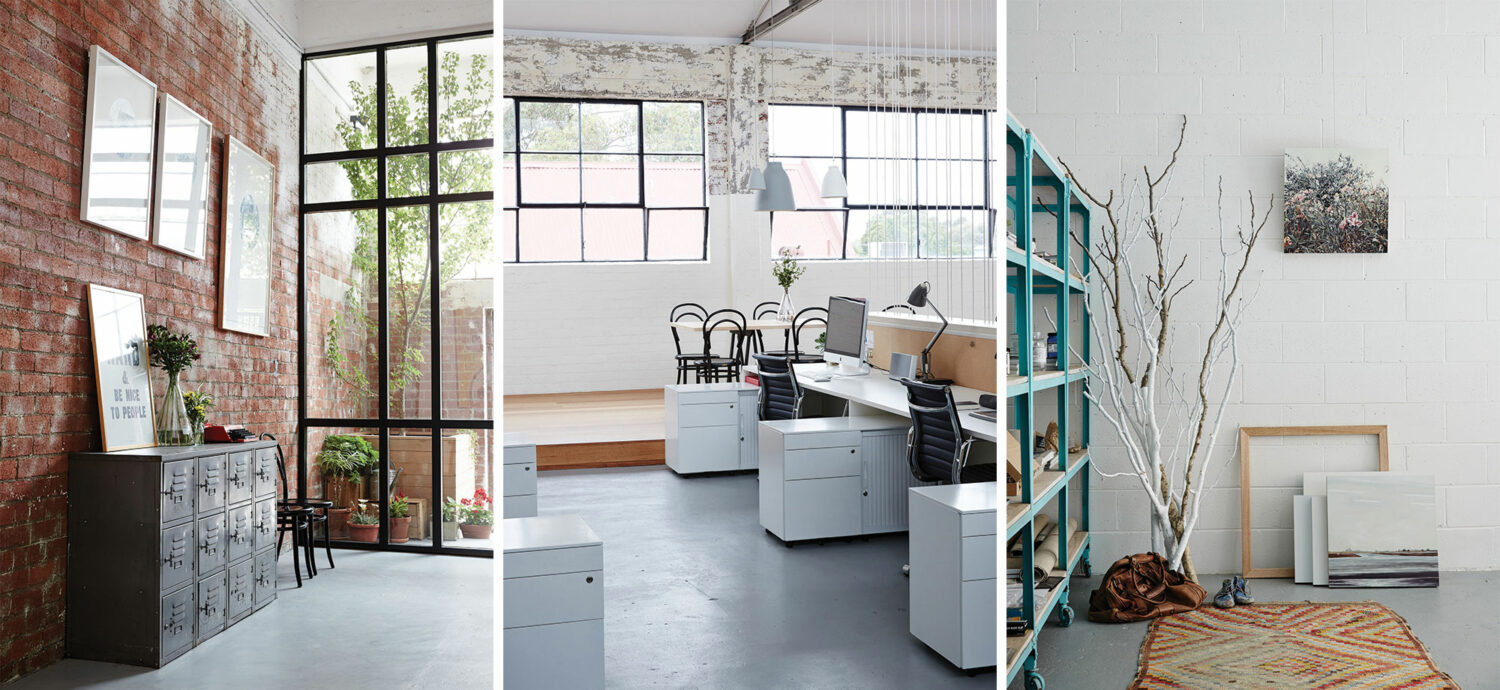

“Interior architect Mairead Murphy opened up Studio Sisu to Est recently to share the shared creative workspace she has designed…”

Our Great & Small wallpaper range was featured in Artichoke.
“…The Great & Small collection consists of hand-drawn animal characters, drawing on folk art patterning and graphic techniques across four distinct designs….“


Our Great & Small wallpaper range was featured in Marie Claire.
“The new Great & Small wallpaper collection from Mairead Murphy Illustration may be for kids, but we think it’s way too pretty to be just for the little ones in your life…“


More than once, in previous posts I’ve mentioned that I’d be lost without my lists. So I thought I’d give you a quick rundown on my system as a useful tool during your own architectural project.
If you’re partway through a build or renovation with your own household to run alongside it, I suspect some of this will feel familiar. If lists aren’t your thing, skip this one and we’ll chat more next month.
A renovation asks a lot of your attention. On top of ordinary life, there are now a new set of approvals and decisions to be made.
Your brain can get overwhelmed a lot quicker than you might think. Did you know, your conscious brain can only process around 40 bits of information per second while your subconscious mind can process a whopping 11 million! When your conscious brain is trying to remember even a few extra things, it loses the ability to critically process additional information and you have less capacity for good decision making and creativity.
In a study by Stanford University professor Baba Shiv two groups of participants were asked to remember a number while deciding if they were going to have chocolate cake or fruit salad. One group was asked to remember a two-digit number and the other a seven-digit number. Two digits is easy to remember but in previous studies seven digits had been shown to be the upper limit of working memory. The participants with the two-digit number were more likely to make the healthier more rational choice of fruit salad, while the group remembering the longer number fell back on their subconscious impulse for the chocolate cake . – a small, measurable sign that when your conscious mind is full, you fall back on impulse rather than considered choice.
A renovation is full of exactly this kind of decision fatigue. The fewer things you’re trying to hold in your head at once, the more capacity you have left for the decisions that actually need your judgement — things like whether that joinery finish is really the one you want.
For me, my list is where I keep everything I need to do and remember so that I don’t have to remember. It frees up my brain and lets me concentrate on the task at hand. It helps me to prioritise and make sure I’m making progress on the tasks that are the most urgent. On days when I feel like I’ve struggled through, it gives me a sense of achievement, because it’s a visible reminder of what I have managed to get done.
The first thing to do is write down everything. I mean everything, for every aspect of your life. Don’t worry about sorting it yet, just get it out of your head and onto paper. Don’t gloss over big overview tasks with one item, break them down into steps so you can tackle one step at a time. I like to keep tasks small enough that I could get them finished in a day.
Once it’s all out, group similar items together. This could be into categories – renovation decisions, business, personal tasks, family tasks, things that need doing around the house. Or you might want to group them by the type of task they are – phone calls, deskwork, errands. Use whatever grouping actually matches how you move through your week. If any big overview items are still lurking in there, this is the moment to break them down further.
I split my system across a few places, and this tends to work well for renovation clients too:
– A paper list for the here-and-now. For day-to-day tasks, I still prefer pen and paper — there’s something about physically crossing something off.
– A digital tool for the bigger picture. Project overviews, longer-term milestones, and ideas that don’t need daily attention live in Asana for me — for a renovation, this might be where you track the overall program, key dates, and decisions still to be made further down the track.
– Reusable checklists for anything repeatable. A site-visit checklist, a moving checklist, a “questions to ask the builder” list — anything you’ll need again is worth building once and reusing.
Every week, I sit down with a coffee and rewrite my list from scratch. It sounds excessive, but the act of rewriting naturally drops anything already finished and forces me to be honest about what actually matters for the week ahead. For a renovation, this is a good moment to check in on where the project sits — what’s waiting on you, what’s waiting on your builder or architect, and what has a deadline attached.
Finally and perhaps most importantly, there’s never much time to celebrate small goals and achievements so when you’ve finished something, get a big fat texta and cross it off your list. Take a moment to feel good about getting something done.
If you’re in the thick of a project right now, I hope some of this helps make the load a little lighter. And if you’re just starting to think about one, this is exactly the kind of thing we help clients manage from day one — get in touch, and let’s talk about what a well-run project could look like for you.

Studio Sisu was featured in My Scandinavian Home.
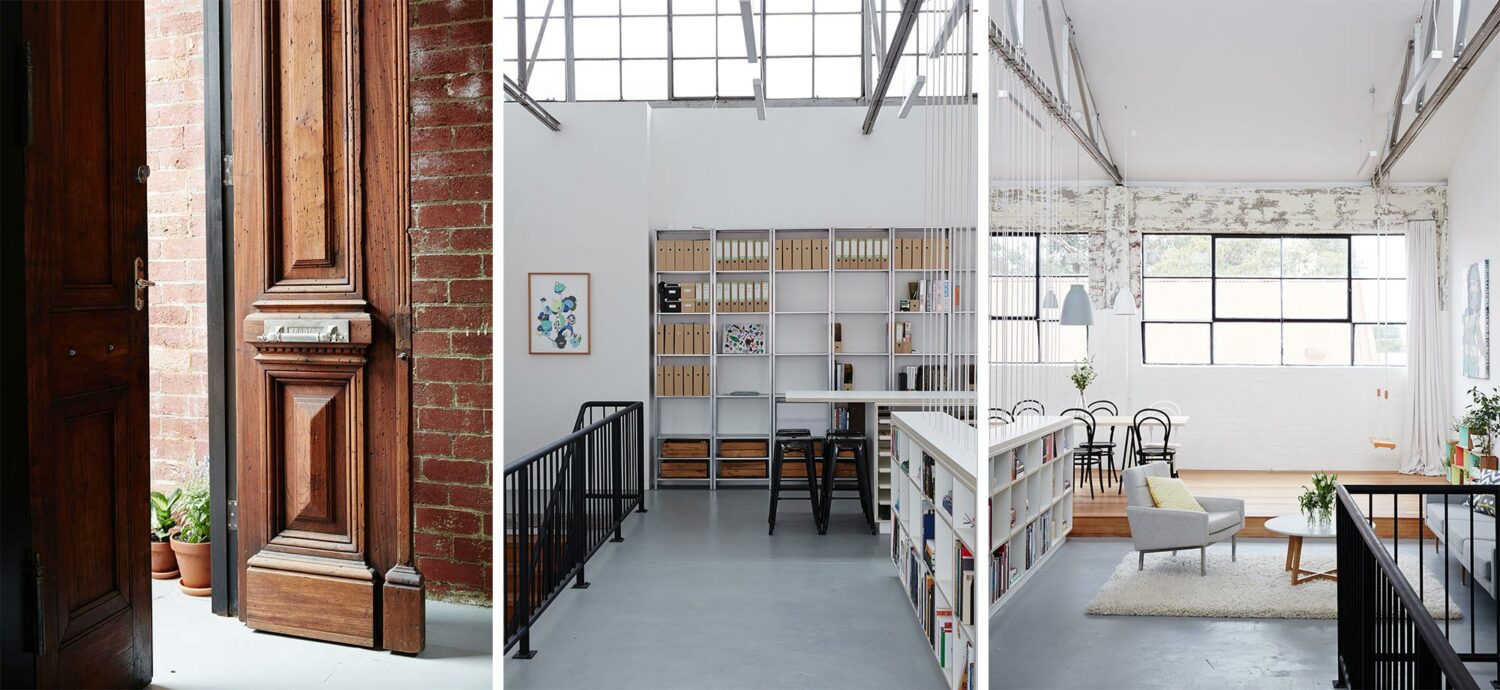
“The more I see of collaborative or shared office spaces the more I feel they are an extremely inspiring and efficient way of working for independent business people. Designer and Illustrator Mairead Murphy of Maike Design studio converted this disused warehouse space in Northcote, Melbourne into a beautiful, vibrant and inspiring workspace for independent designer and artists…”

Our Studio Sisu shared workspace has been featured on Design Milk.
“Once an old warehouse, the now converted studio boasts a lot of natural light and retains the volume and rich texture of the original 1940’s red brick building…”

Our Studio Sisu shared office space has been featured on Yellowtrace.


I have always felt that ‘Home’ is an important concept. So much so that I have chosen to focus Maike Design Studio on creating and investigating residential design. Now that we are spending more time than ever inside, the importance of finding or creating a place to retreat to that makes us feel at home should not be underestimated.
There is a beautiful phrase in The Poetics of Space by Gaston Bachelard that for me perfectly sums up what a home is:
Architecturally, a space is a house – a container. It is the act of living in the space that creates a home. A dwelling (noun) collects us together with our loved ones but is nothing without the act of dwelling (verb) within it to animate and fill its spaces.
A home is not a transformative tool, but rather provides the space and stability to just be ourselves. It is without outside expectations and is a base that provides us with stillness and rejuvenation. It represents what is secure and familiar, in contrast to the potentially unknown world outside.
A home is mentally quieter, even when we are physically closer to the noise and demands of members of our household. We allow people into our homes on our terms and control (or rely on social etiquette to dictate) the line between public and private. The ability to control and layer the graduated relationship between us and the rest of the world defends the intimacy of our home.
Within a home we’ve also got to think about the dynamic between all members of the household. One characteristic of 21st century housing is the importance placed on separated, private spaces. The provision of individual spaces for every family member can be seen now in Australia across all socio-economic groups. Interestingly this contrasts with the parallel development of open plan living.
An ill-conceived large space that combines all the home’s living activities does not allow for retreat or differing activities. The only retreat option is to absolute privacy – individual bedrooms and separate studies. There is no middle ground. Not allowing for a range of functionality and spatial qualities has led to the replication of spaces. Kitchens sit alongside a fully equipped butler’s pantries, theatre rooms or retreats counter the open plan lounge.
It is not the size of the house but the spatial quality, adjacency and function of shared family spaces, considered both individually and as part of the whole that create a delightful home. Finding the balance of zoning, screening and visual connection between spaces provides unique areas, each suited to their function but in constant dialogue with those adjacent. This allows for differing functions to co-habit the same space.
The opportunity to create this sense of home for other people is a huge privilege and one I enjoy immensely. During this period of social distancing, I hope that the safety and familiarity of your home is bringing some calm to your days.

We have started 2020 with a heavy heart.
Australia has lost human life, millions of hectares of native bushland, thousands of homes and an estimated one billion animals and birds. Our communities and delicate ecosystems have gone up in smoke and each day extraordinary fire fighters and volunteers are working to bring things under control.
I was going to keep writing about my process review but this is not business as usual. In the face of a tragedy of this scale it didn’t really seem important. There is another thought that has been growing during my review and setup that I wanted to share: how do we make a lasting difference to the world?
When I was little, I had a book called Miss Rumphius. It is a story about a girl who was captivated by her grandfather’s stories. He told her that as well as having adventures she had to do something to make the world more beautiful. She grew up, went on adventures all over the world and when she grew old she lived by the sea. Remembering that she hadn’t done what she promised her grandfather, she tried to figure out what to do, but she thought that the world was already quite beautiful. Eventually after a patch of lupins brought her joy, she decided she would plant lupin seeds across the country. Every year the flowers bloomed and turned countryside into a colourful sea of flowers for everyone to enjoy.
I think lupins might be a weed so the story kind of comes apart but the sentiment of having a responsibility to leave things better than you found them, however you are able, has stuck with me. It is one of the reasons I am drawn to design and the built environment. As a bunch of people, I love how thoughtful designers and Architects are. I believe that well considered design has the capability to create change. It can improve quality of life on an individual level and create social shifts and greater efficiency on a larger scale.
I have been feeling it particularly since having children – I think it made me look more closely at the world beyond my own lifespan and like many people, I have felt the larger, growing shift towards the realisation that things aren’t just going to work themselves out and the people that we have in the past entrusted to make high level change, are not. The tragic events of this summer have shown the magnitude of what we are facing.
After having Flynn, our oldest, we realised that the plastic we put in the recycle bin wasn’t being recycled so did everything we could to eradicate disposable plastic from our lifestyle. We then looked closely at where all our money was going. We changed our bank accounts and homeloan to a more ethical bank, shifted superannuation accounts and changed (and drastically reduced) how we shopped.
When Kira was born I felt acutely how small our changes were in the scheme of things. I couldn’t read the news, talk about social issues, politics or the environment without feeling helpless, upset and angry. Eventually I made a decision – one thing I absolutely wanted for my children was for them to feel hopeful and know that they could always make a difference.
How was I going to teach them this if I was completely overwhelmed?
Jana Stanfield
The response to the bushfires has highlighted how beautiful, supportive and generous people can be. I hope that this momentum can be maintained to be the catalyst for real awareness and lasting change in environmental policy and planning.
As well as the immediate bushfire response, there are other wonderful examples of people working to create large positive scale change across a range of fields. A few that I’ve found particularly inventive and inspiring are:
The Nightingale group have shifted the landscape of residential developments and proved that there is a better approach to inner city housing provisions than what has been provided by the previous developer-driven model.
A non-profit called Career-Tracker provide a professional network and support system for indigenous young adults through education and career opportunities that would likely not be available to them otherwise.
Photographer Jeremy Cowart and Michael Moore are putting together the Purpose Hotel where every aspect of your stay is linked to a cause or a need. All the items within the hotel are sourced from humanitarian foundations or to support local creative industries.
Architects Assist is a platform for Architects and Building Designers to provide pro bono services to people who are affected by disasters to assist in the rebuilding of their homes and lives.
Over the last year or so I have been discussing this with other designers and colleagues and have found that I’m not the only one feeling like this. But beyond donating some money, how do you get started? As an individual, how do I find the time, traction and influence to create something bigger than just a single person?
I have plans that will be implemented as Maike Design grows. I am working to provide a workplace that provides flexibility for the requirements of family equally to both partners. I want to look at sharing with my team the decision of where a portion of our profits will go in order to contribute to social and environmental causes. I want to provide an environment that supports and encourages ongoing education and development opportunities including engaging with community agendas.
These plans are all in-house and feel too small. But I’ve got to start somewhere.
I don’t have an answer, just a lot of questions.
I’d love to hear your thoughts and ideas you are implementing to make a positive change.
In the meantime I encourage you to join me in supporting the organisations who are providing critical support to the victims of this disaster. Every little bit helps.
Red Cross disaster relief fund
Or get some ideas of changes you can make from Instagram account be_an_unfucker

